Maersk Raises Guidance as Market Volatility Boosts Margins
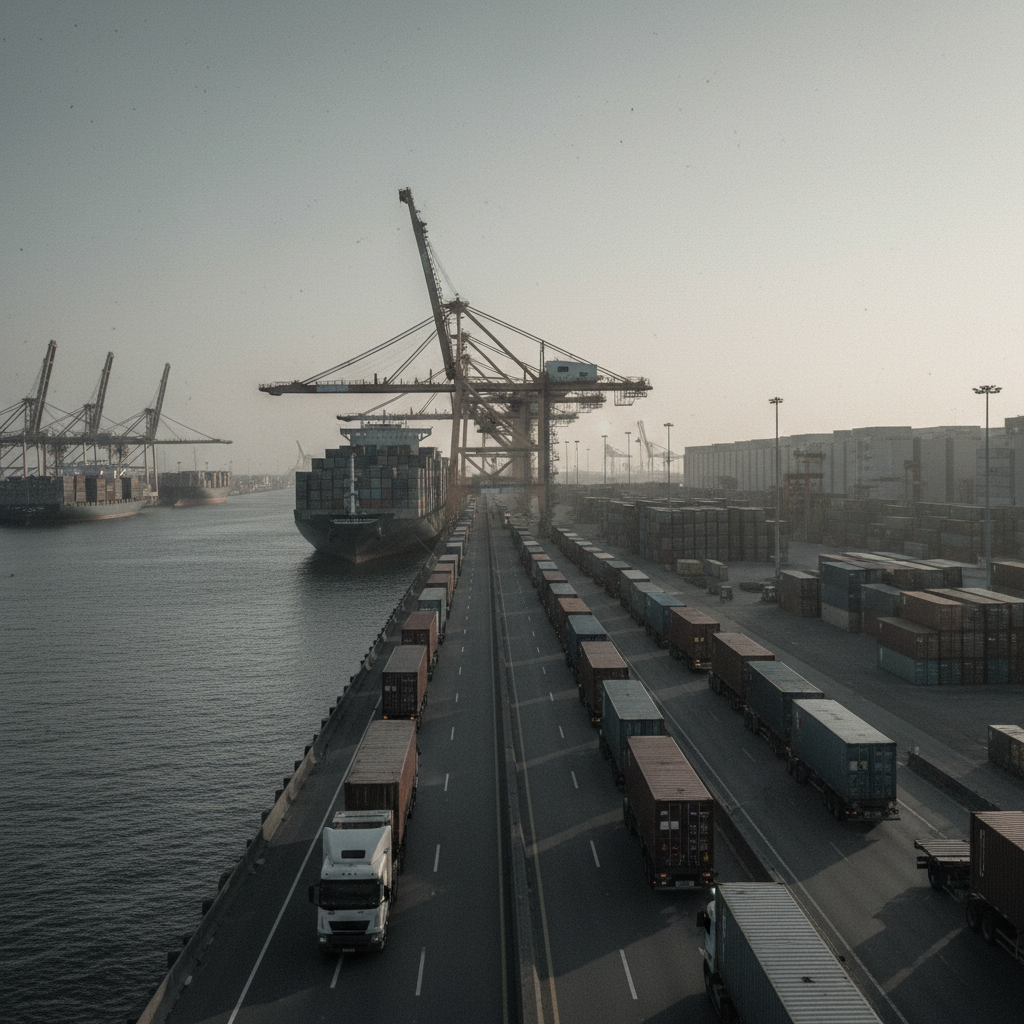
A.P. Moller-Maersk has significantly upgraded its full-year financial outlook for 2024, signaling that the prolonged disruption in global shipping lanes is translating into a windfall for ocean carriers. The Danish shipping giant announced a revised EBITDA guidance of $8 billion to $10 billion, a substantial jump from the $4.5 billion to $7 billion range projected just weeks ago in early May.
The company also adjusted its EBIT forecast from a potential loss of $2 billion to a profit range of $3 billion to $5 billion. This upward revision, as reported by The Loadstar, highlights a freight rate environment that is maturing far more aggressively than analysts anticipated at the beginning of the year. Industry consultant Lars Jensen noted that the scale of the upgrade implies that actual freight rates are tracking roughly $300 to $350 per 40-foot equivalent unit (FEU) higher than what was expected only two months ago.
Shippers Allege Opaque Surcharges and Targeted Scarcity
While Maersk’s shareholders may welcome the news, the shipping community is responding with increased skepticism and frustration. According to The Loadstar, numerous shippers have accused carriers of exploiting current disruptions through a combination of "opaque surcharges" and the strategic reduction of contract allocations.
Cargo owners report that while they expected—and in some cases accepted—emergency bunker surcharges following diversions around the Cape of Good Hope, many of these fees have remained in place even as fuel markets stabilized. One anonymous shipper cited by The Loadstar characterized the current environment as a "cash grab," alleging that while contract space is frequently denied due to "high demand," capacity often miraculously becomes available if a customer is willing to pay a higher spot rate.
James Hookham, director of the Global Shipper’s Forum (GSF), suggested that the industry is witnessing a "throw jelly at the wall" approach to general rate increases (GRIs). Hookham argued that the lack of transparency regarding how surcharges are calculated is eroding trust, suggesting carriers are using service disruptions to inflate profit margins rather than merely recovering additional operating costs.
Strategic Implications for Global Supply Chains
The market dynamics currently at play reflect a complex interplay of genuine cost increases and capacity management. The GSF identified four primary drivers currently influencing the market:
- Cost Recovery: Legitimate expenses related to rerouting vessels away from high-risk zones.
- Fuel Fluctuations: The recovery of higher global bunker costs.
- Aggressive Rate Hikes: Wide-scale attempts to raise General Rate Increases (GRIs) across multiple lanes.
- Capacity Management: The active limiting of bookable slots to maintain a tight market despite an underlying global oversupply of vessel tonnage.
For many shippers, the current situation feels like a repeat of the pandemic-era logistics crisis. According to The Loadstar, the GSF is now advising shippers to maintain meticulous records of "non-discretionary surcharges" to calculate exactly how much carrier maneuvers are impacting their bottom lines. This data is intended to help logistics managers explain budget variances to financial directors and to quantify the extent to which carriers have deviated from original contract agreements.
OTR Insight
The tension between Maersk’s record profit upgrades and the operational struggles of the shipping community highlights a critical need for advanced freight strategy and operational efficiency. When ocean carriers exercise significant leverage through surcharges and reduced allocations, shippers and brokers must pivot from reactive booking to proactive capacity management. Relying on stale contracts that lack robust "no-roll" guarantees or transparent fuel adjustment clauses can leave a supply chain exposed to hundreds of thousands of dollars in unbudgeted costs within a single quarter.
To mitigate these risks, firms should diversify their carrier mix and audits every invoice for surcharge accuracy against market benchmarks. Establishing a resilient logistics infrastructure requires balancing long-term partnerships with the agility to pivot toward alternative lanes or modes when primary routes become cost-prohibitive. OTR Insights provides the operational efficiency and freight strategy advisory necessary to navigate these volatile cycles. By helping organizations refine their procurement processes and carrier vetting, OTR Insights ensures that supply chain leaders maintain control over their margins even during global disruptions. Learn more at www.otrinsights.com.