Colorado Ends Counter Service for Key Transport Permits
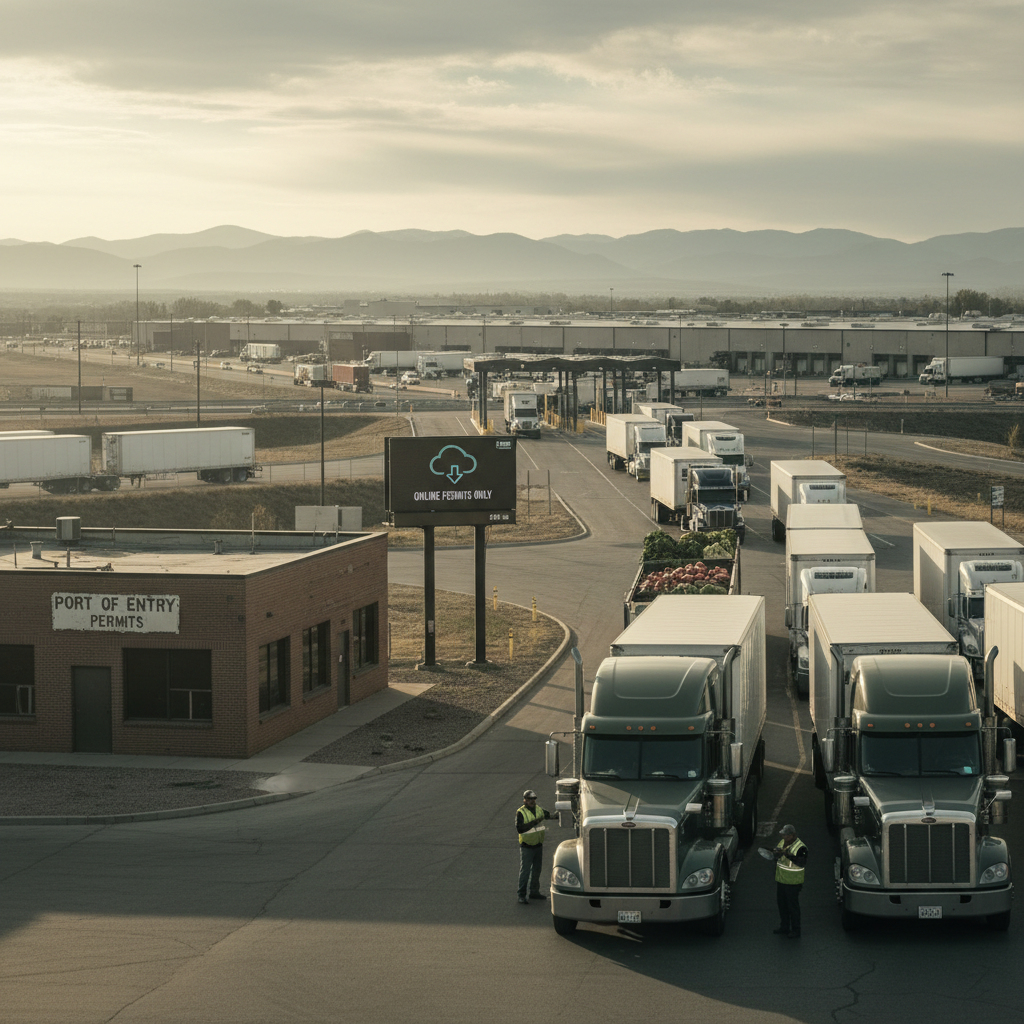
Commercial motor vehicle operators traversing Colorado must now pivot to digital-only platforms for several essential transit authorizations. Effective June 1, the Colorado State Patrol Port of Entry has officially decommissioned in-person sales for four specific permit types at state ports of entry, mandating that all transactions occur through the Colorado Department of Transportation’s (CDOT) online portal.
The transition, reported by Land Line Media, moves the administrative burden away from physical weigh stations and into the back office. The shift affects 72-hour laden weight permits, special fuel tax permits, 60-day harvest permits, and temporary household goods mover permits.
This move toward the COOPR online permitting system marks a significant change for out-of-state carriers and independent owner-operators who previously relied on port-of-entry kiosks to rectify registration or tax gaps upon entering the state.
The Scope of Digital Mandates
The digital requirement covers a broad spectrum of commercial activity. For carriers operating vehicles exceeding 16,000 pounds (empty) that are not already registered in Colorado or apportioned through the International Registration Plan (IRP), the 72-hour laden weight permit is the standard compliance tool. Under the new rules, drivers must calculate their loaded weight up to the 80,000-pound legal maximum and secure the permit via the COOPR site before or during transit, rather than at the window.
Similarly, the Special Fuel Tax permit—required for vehicles with three or more axles or those exceeding 26,000 pounds—is now exclusively digital. According to Land Line Media, applicants must provide specific lane data, including entry points, final destinations, and projected total mileage within state lines.
Additional administrative shifts include:
- 60-Day Harvest Permits: Designed for non-apportioned vehicles engaged in custom harvesting. Regulations restrict these to two permits per vehicle within a 12-month window.
- Household Goods Movers: Carriers not based in Colorado but performing residential moves within the state must now utilize the online system to obtain Public Utilities Commission-regulated permits.
Operational Hurdles for Carriers
While digitalization aims to streamline port-of-entry throughput, it introduces new lead-time requirements for dispatchers. CDOT has indicated that while the system is accessible 24/7, permit processing is not always instantaneous. Applications submitted over weekends may face delays ranging from 24 to 48 hours.
To utilize the COOPR system, fleets must establish a formal CDOT account. This registration process requires verified business documentation, including a valid USDOT number.
"The days of grabbing a few different permits in person when heading into Colorado are ending," Land Line Media noted, emphasizing that the physical port-of-entry is no longer a point of sale for these specific documents.
Operational Implications for Fleets
For safety directors and compliance officers, the Colorado shift necessitates a change in standard operating procedures (SOPs). Carriers can no longer rely on drivers to handle these "on-the-fly" registrations at the border.
- Pre-Trip Planning: Dispatchers must verify IRP status for Colorado on all power units before dispatch. If a 72-hour permit is required, it should be secured at least two business days prior to the border crossing to account for potential processing lags.
- Account Management: Compliance teams should register for a COOPR account immediately, rather than waiting for an active load to trigger the need.
- Driver Education: Drivers should be instructed that ports of entry remain open for enforcement and weighing, but they will be turned away if they attempt to purchase these specific permits at the counter, which could lead to citations for non-compliance upon entry.
OTR Insight
The transition to digital-only permitting in Colorado highlights a growing trend among state agencies to offshore administrative tasks to the carrier. This shift increases the risk of "clerical grounding," where a truck is legally unable to move not because of a mechanical failure, but because of a processing delay in a state database. For carriers, the core issue is staying ahead of fragmented state-level compliance requirements that can disrupt tight delivery windows.
To mitigate these risks, fleets should centralize their permitting processes and audit their IRP and IFTA filings quarterly to ensure coverage in high-traffic corridors like the I-25 or I-70. Proactive management of these credentials prevents costly at-the-border delays and potential safety score hits. OTR Insights provides comprehensive risk management and compliance advisory services to help carriers navigate shifting state regulations and digital mandates. By streamlining these administrative hurdles, OTR Insights (www.otrinsights.com) helps fleets maintain operational velocity without sacrificing regulatory accuracy.