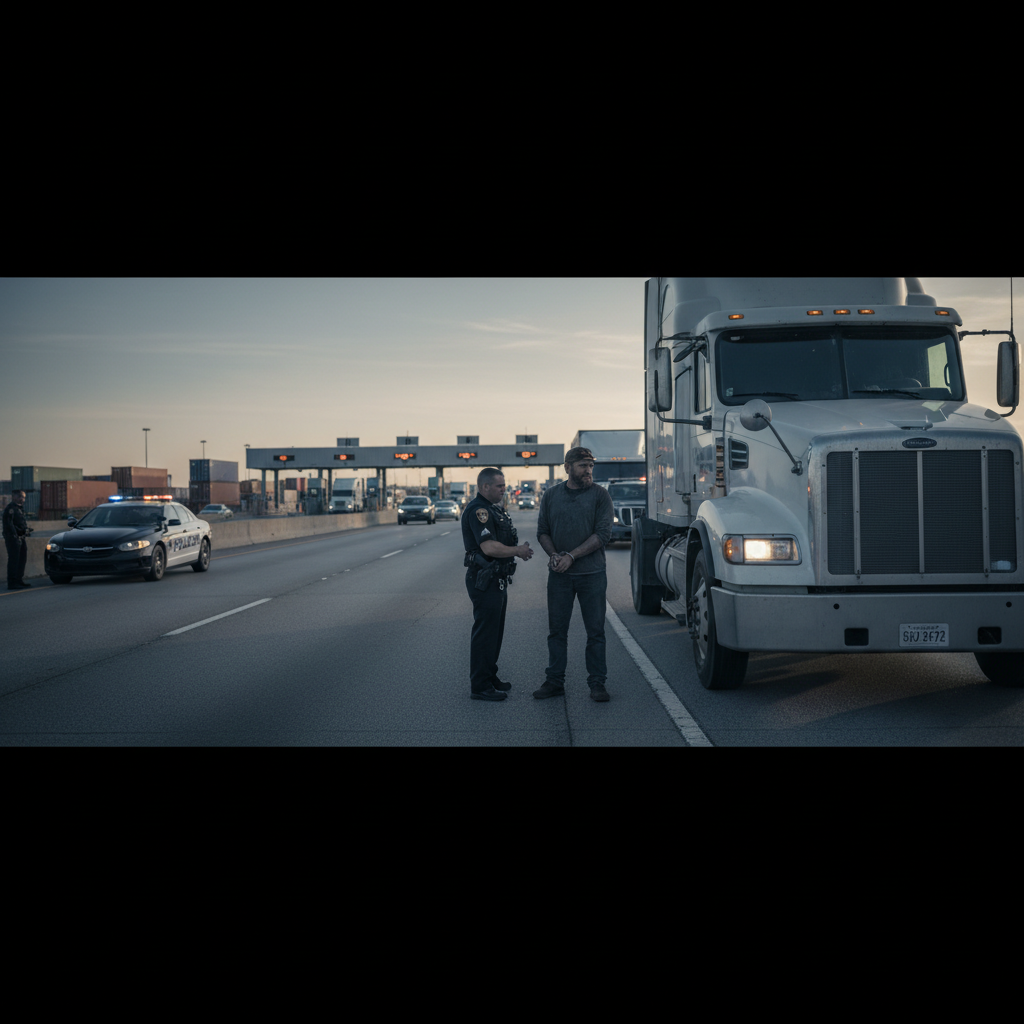
An Arizona Department of Public Safety trooper pulled over an oversize load on I-10 in Phoenix on May 28, initially for lacking lights and flags. The routine stop quickly escalated. An inspection uncovered 32 distinct safety and administrative violations, according to the agency.
The driver lacked a commercial driver's license, proof of insurance, and the required oversize permits. The rig, hauling a large piece of equipment from Mesa to Tonopah, was also operating without a certified pilot car. Most critically, an inspection of the combination revealed that 10 of the vehicle's 14 brakes were inoperative. The driver was cited, and the vehicle was towed from the scene.
The High Cost of a Single Stop
While an extreme case, this incident represents a risk profile that can financially cripple or bankrupt a modern carrier. A single, severe failed inspection can trigger a cascade of consequences that extend far beyond roadside fines. The violations recorded in the Arizona stop—from faulty brakes to licensing and insurance failures—feed directly into a carrier's Compliance, Safety, Accountability (CSA) score, the bedrock of how the Federal Motor Carrier Safety Administration (FMCSA) quantifies a fleet's safety posture.
A sudden spike in CSA scores following a poor inspection can make a carrier's insurance premiums skyrocket or lead to outright cancellation of their policy. In a market already contending with historically high insurance costs, losing coverage or facing a renewal at double the price is an existential threat. Furthermore, a poor CSA record makes a carrier radioactive to savvy brokers and shippers, who increasingly scrutinize safety data to mitigate their own liability.
Compliance as a Strategic Imperative
In the current legal climate, a documented history of violations like inoperative brakes or running without permits becomes plaintiff attorneys' Exhibit A in accident litigation. These documented failures are powerful ammunition in the pursuit of "nuclear verdicts"—jury awards that can climb into the tens of millions of dollars. An argument that a carrier demonstrated negligence becomes substantially easier to make when a pattern of non-compliance is officially recorded.
Preventing such outcomes requires more than just a cursory pre-trip inspection. It demands a systemic commitment to operational excellence, encompassing driver training, maintenance programs, and administrative oversight of permits and insurance. Leading carriers view compliance not as a cost center, but as a strategic shield against catastrophic financial risk. Proactive management, guided by expert analysis of telematics and operational data, is the new baseline for survival. As firms like OTR Insights advise, building this resilient compliance framework is essential for navigating a market defined by high stakes and thin margins.
In an industry where a single weak link can sever the entire supply chain, the Arizona incident is a lesson for carriers, brokers, and shippers alike. The difference between a profitable haul and a company-ending lawsuit often comes down to the dozens of small, critical details that are checked and verified long before the wheels start turning. For carriers seeking to fortify their operations against these escalating risks, expert guidance at otrinsights.com can provide the necessary strategic direction and implementation support.