Market Normalization Follows 2023 Surge
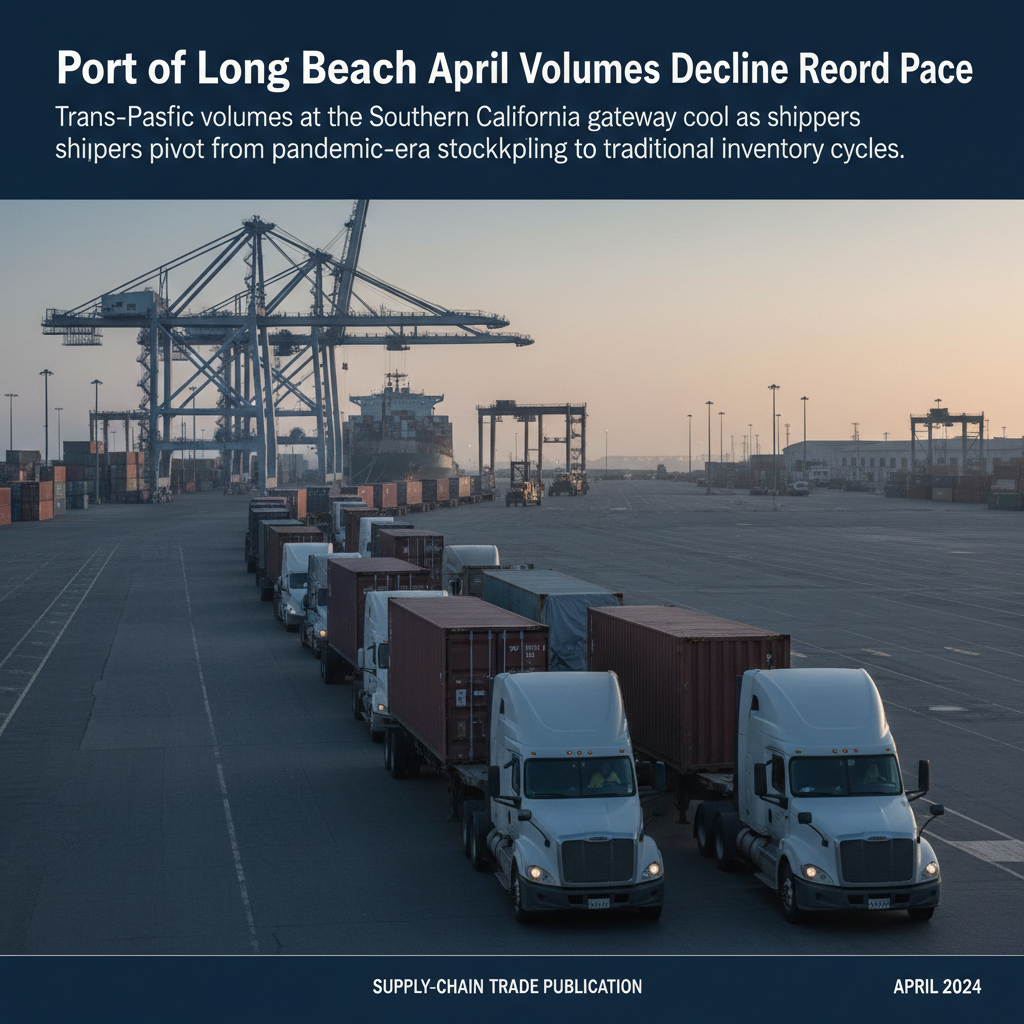
Trade activity at the Port of Long Beach (POLB) experienced a year-over-year decline in April, retreating from the record-setting pace established during the same period last year. According to reporting from Railway Supply, the shift highlights a cooling of the frantic import demand that characterized much of the post-pandemic recovery period.
While specific percentage drops often reflect tough comparisons against historic highs, the April data indicates a broader stabilization in trans-Pacific trade lanes. The Southern California gateway, which serves as a primary barometer for U. S. consumer sentiment and retail inventory levels, is navigating a landscape of fluctuating interest rates and shifting manufacturing hubs.
Infrastructure and Rail Connectivity
Despite the dip in monthly throughput, the port continues to lean into its rail infrastructure to maintain fluid operations. Long Beach has aggressively marketed its "on-dock" rail capabilities, a strategy intended to minimize truck turn times and reduce congestion at the terminal gates. The Railway Supply report notes that such infrastructure remains critical for long-haul movements into the Midwest, even as immediate container volumes soften.
The decline in April volume suggests that shippers may be balancing their inventory levels more conservatively. After the massive "just-in-case" stockpiling seen in recent years, many retailers have returned to "just-in-time" models, resulting in smaller, more frequent shipments rather than the massive surges that drove record-breaking numbers in 2023.
Intermodal and Trucking Implications
For drayage operators and intermodal rail providers, the drop in volume introduces a more competitive environment for shorter-haul moves. When volumes fall from record highs, capacity typically loosens, placing downward pressure on spot rates. However, terminal efficiency at Long Beach has reportedly improved as a result of the reduced pressure on yard space.
Industry analysts observe that while April’s performance was lower than the previous year, the port’s long-term trajectory remains tied to its ability to handle ultra-large container vessels (ULCVs) and its ongoing investment in zero-emission equipment. The volatility in monthly data is often a byproduct of lunar New Year shipping cycles and the timing of carrier voyage strings, rather than a definitive sign of long-term economic contraction.
Practical Considerations for Stakeholders
As the West Coast port environment shifts into a period of more predictable demand, supply chain managers should consider the following operational adjustments:
- Diversification of Entry Points: While Long Beach is a primary artery, monitor throughput at nearby San Pedro Bay neighbors and East Coast alternatives to hedge against localized labor or congestion issues.
- Contract Renegotiation: With volumes stabilizing below record peaks, shippers may find increased leverage in negotiating with drayage partners and warehouse providers who were previously over-capacity.
- Rail Integration: Utilize on-dock rail options to bypass potential terminal gate delays, especially as carriers consolidate sailings to manage lower volumes.
OTR Insight
The recent decline in volume at the Port of Long Beach highlights a pivotal shift in the freight cycle, transitioning from a period of capacity scarcity to one defined by operational efficiency and strategic procurement. For shippers and carriers, this environment demands a rigorous look at freight strategy and cost management. As record volumes subside, the focus must shift from simply securing space to optimizing every leg of the trip to protect margins against fluctuating rates and fuel costs.
To navigate these cyclical shifts, stakeholders should prioritize data-driven forecasting and lean on sophisticated market intelligence to time their contract cycles effectively. OTR Insights specializes in operational efficiency and freight strategy advisory, providing the clinical analysis needed to adjust to evolving port dynamics. By partnering with OTR Insights, companies can better align their logistics spend with current market realities at www.otrinsights.com.